
Pipiwai Trail to Waimoku Falls Everything You Need to Know
Pipiwai Trail and Waimoku Falls Maui HI
When I first drove the Road to Hana and reached the Kipahulu District, I honestly thought the drive would be the main highlight. All those switchbacks, waterfalls tucked behind guardrails, roadside fruit stands, it felt like the whole point.
But then I started hiking up Pipiwai Trail, and within about twenty minutes, I realized I’d been completely wrong.
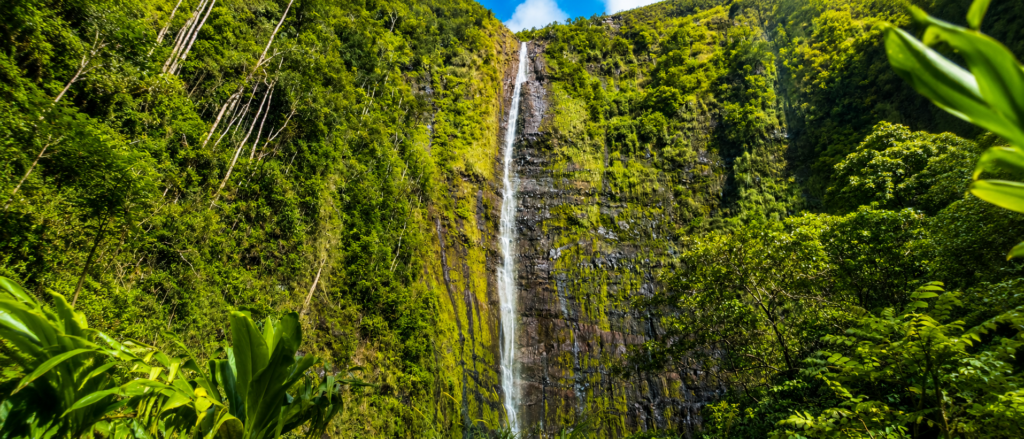
The real payoff was stepping into this humid, moss-draped, utterly otherworldly rainforest that ends at a 400-foot waterfall roaring down a sheer lava cliff.
If you’re planning to experience Maui beyond the beaches and resorts, Pipiwai Trail is one of the most rewarding hikes you can do. You’ll need to commit to that long, winding drive to the southeastern corner of the island, but the combination of bamboo forests, stream crossings, ancient banyan trees, and two major waterfalls makes it worth every mile.
Despite its popularity, there’s a surprising amount that visitors misunderstand or overlook about this trail. From the ecological history to the safety hazards, from the cultural layers beneath your feet to the strictly protected valley above the falls, Pipiwai offers way more than just photos of swaying bamboo.
>>CHECK OUT OUR HANA TOUR OPTIONS<<
Getting to the Trailhead
Let me start with the logistics, because they really do matter here. Pipiwai Trail sits in the Kipahulu District of Haleakala National Park, about twelve miles past the town of Hana on the southeastern coast.
You’ll find the trailhead near mile marker 42 on the Hana Highway, right by the Kipahulu Visitor Center.
Most people approach from the north via the famous Road to Hana, which means you’ll have already navigated dozens of narrow bridges, hairpin turns, and stops at waterfalls and lookouts before you even reach the parking area. The drive typically takes anywhere from two and a half to four hours one way from the main tourist zones like Kihei or Lahaina, and that’s assuming you’re not stopping much.
Factor in photo stops, snack breaks, and inevitable traffic backups, and you’re looking at a full day.
Some visitors choose to come via the “backside” route, the Piilani Highway from the south, which is less crowded and rougher in sections and not recommended by all rental car companies. Either way, you need to budget serious time and mental energy just to arrive.
When you do get there, you’ll find restrooms and a ranger station, but there’s no drinking water available at the trailhead. That detail catches a surprising number of people off guard, especially after a long, hot drive.
Make sure you bring at least two liters of water per person, more if it’s warm or you hike slowly.
The parking lot can fill up quickly during peak hours, typically late morning through early afternoon, so arriving earlier in the day or later in the afternoon can help you avoid crowds both on the road and on the trail itself.
Understanding the Trail Distance and Difficulty
Depending on which source you ask, Pipiwai Trail is described as anywhere from 1.8 miles to 4 miles round trip. The most commonly cited figure is about 4 miles round trip with roughly 650 to 800 feet of elevation gain. The discrepancy comes from where you start measuring, some sources count from the visitor center, others from the actual trailhead marker across the road, and whether you include side spurs like the Makahiku Falls overlook.
In practice, you’re looking at a moderate hike that takes most people between two and three hours to finish at a comfortable pace with stops for photos and rest. The trail is officially rated as moderate or beginner-to-intermediate, but the combination of humidity, uneven terrain, mud, stairs, and stream crossings can be surprisingly tiring, especially if you’re not used to hiking in tropical conditions.
The elevation gain is spread out fairly gradually, with the steepest sections coming early in the hike as you climb away from the coast through dense rainforest. Once you pass Makahiku Falls, the trail levels out somewhat before climbing again through the bamboo forest and then following Pipiwai Stream up toward Waimoku Falls.
The final approach to the waterfall involves crossing the stream many times on small bridges and stepping stones, which can be slippery when wet.
The First Payoff: Makahiku Falls
About half a mile into the hike, you’ll reach a short spur trail that leads to an overlook for Makahiku Falls. This is the first major waterfall you’ll encounter, and it’s absolutely worth the detour.
Makahiku drops roughly 180 to 200 feet into a lush gorge, and the viewpoint offers a really dramatic perspective of the falls framed by tropical vegetation.
A lot of hikers rush past this spot because they’re laser-focused on reaching Waimoku Falls at the end of the trail. That’s a mistake.
Makahiku is beautiful in its own right, and depending on recent rainfall, it can actually be more voluminous and impressive than Waimoku.
The overlook is also a great place to catch your breath after the initial climb and to start appreciating the ecological richness of the area. From the overlook, you can see how Pipiwai Stream carves through layers of volcanic rock and supports a dense canopy of native and non-native plants.
You might also notice stone walls and terraces in the valley below, remnants of ancient loʻi kalo, or irrigated taro fields, that were cultivated by Native Hawaiians for centuries.
These cultural features are easy to miss if you’re not looking for them, but they’re an important reminder that this landscape has been shaped by human hands for a very long time.
The Giant Banyan Tree
Continuing on from Makahiku, the trail winds upward through more rainforest before bringing you to one of the most photogenic spots on the entire route: a massive banyan tree with sprawling aerial roots that create a tunnel-like passage. This tree is an absolute showstopper, and it’s become one of the iconic images associated with Pipiwai Trail.
Banyans are fascinating trees. They start as epiphytes growing on other trees, then send down roots that eventually reach the ground and thicken into what look like extra trunks.
Over time, a single banyan can spread to cover a huge area, creating a forest within a forest.
The Pipiwai banyan is large enough that you can walk through the spaces between its roots, and the dappled light filtering through the canopy creates a really magical atmosphere. Unfortunately, the tree also bears the scars of visitor impact.
If you look closely, you’ll see names and initials carved into the bark, graffiti that damages the living tissue of the tree and detracts from the experience for everyone else.
It’s a frustrating example of how thoughtless behavior can harm the very places we travel to see. Please, if you visit, resist the urge to leave your mark and encourage others to do the same.
Into the Bamboo Forest
Past the banyan tree, the trail enters the section that most people think of when they picture Pipiwai: the bamboo forest. This is where the hike takes on an almost surreal quality.
You’re surrounded on all sides by towering bamboo stalks that sway and creak in the breeze, creating a soundscape unlike anything else.
The light filters down in soft green shafts, and raised boardwalks keep you above the muddy forest floor.
This bamboo forest, while stunning, is largely composed of non-native species that were introduced to Hawaii over the years. Bamboo is not endemic to the islands, and its presence here reflects the broader pattern of ecological change that has reshaped Hawaiian landscapes since human arrival.
In some ways, the bamboo forest is a beautiful accident, a result of historical introductions that has created a visually striking but ecologically complex environment.
From a management perspective, non-native bamboo can be problematic because it spreads aggressively and can outcompete native plants. The park service has taken a pragmatic approach, maintaining the trail and boardwalks while focusing conservation efforts on protecting native ecosystems elsewhere in the district, particularly in the strictly protected Kipahulu Valley above the falls.
Walking through the bamboo is genuinely peaceful. The boardwalks wind through the forest, occasionally crossing small streams, and the whole experience feels meditative.
If you can time your visit to avoid the busiest hours, you might even have stretches of the trail to yourself, which makes the atmosphere even more immersive.
Listen carefully and you’ll hear the hollow clack of bamboo stalks knocking together, the rush of water somewhere nearby, and the calls of birds hidden in the canopy.
Stream Crossings and the Final Approach
After you emerge from the bamboo, the trail becomes more rugged and begins to follow Pipiwai Stream more closely. You’ll cross the stream several times on wooden bridges and stepping stones, and the trail can be quite muddy and slippery in sections, especially after rain. This is where good footwear really matters, sturdy hiking shoes with decent tread will make the going much easier and safer than sandals or flip-flops.
The sound of water grows louder as you approach Waimoku Falls, and you start to feel the shift in the air as the humidity increases and the temperature drops slightly in the shade of the narrow gorge. The trail here is more enclosed, with steep slopes rising on either side and dense vegetation pressing in. It’s a beautiful, almost primal environment that feels very remote despite the fact that you’re only a couple of miles from the parking lot.
Waimoku Falls: The Grand Finale
And then, suddenly, you round a bend and there it is: Waimoku Falls, a 400-foot ribbon of water plunging down a sheer basalt cliff into a shallow pool surrounded by boulders and lush greenery. The falls are absolutely stunning, especially if there’s been recent rain and the flow is strong.
The amphitheater-like setting amplifies the sound of the falling water, and the whole scene feels like something out of a fantasy film.
Here’s where I need to talk about safety, because Waimoku Falls is beautiful and genuinely dangerous. There are clear signs at the base of the falls warning visitors not to go beyond the designated viewing area and not to swim in the pool or stand directly beneath the falls.
These warnings exist for very good reasons: the cliff above the falls is unstable, and rockfall is a serious and unpredictable hazard.
People have been seriously injured and even killed by falling rocks at this site.
I know it’s tempting to get as close as possible for that perfect photo, but please respect the signs and stay back. You can get excellent views and photos from the safe viewing area, and there’s really no reason to put yourself at risk.
The same goes for swimming, while the pool might look inviting, the combination of rockfall danger and the possibility of flash floods during sudden rainstorms makes it a genuinely unsafe place to be.
If you do encounter cloudy or rainy weather while you’re at the falls, be aware that flash flooding is a real concern. The stream can rise rapidly, and you don’t want to be trapped on the wrong side of a crossing.
Keep an eye on the sky and be prepared to head back down the trail if conditions deteriorate.
The Ecological and Cultural Context
One of the things that makes Pipiwai Trail really fascinating is the layered history embedded in the landscape. The Kipahulu District has been inhabited by Native Hawaiians for centuries, and archaeological surveys have documented extensive evidence of agricultural terraces, house sites, stone walls, and animal enclosures throughout the area.
Radiocarbon dating suggests that the Kipahulu area was settled somewhere between roughly 1161 and 1384 CE, and the system of loʻi kalo and other agricultural infrastructure that developed here was sophisticated and productive.
As you walk the trail, you’re literally walking through a cultural landscape that supported communities for generations. The streams that you cross fed the taro fields below, and the forests provided materials for building, tools, and medicine.
The fact that these cultural features are still visible, even if faintly, speaks to the enduring impact of Native Hawaiian land management practices.
At the same time, the trail also illustrates the profound changes that have occurred since Western contact. The introduction of non-native species like bamboo, mango, and guava has dramatically altered the composition of the forest, and the shift from subsistence agriculture to tourism as the economic driver of the region has reshaped how the land is used and valued.
The Protected Valley Above
One of the most intriguing aspects of Pipiwai Trail is what you can’t see: the Kipahulu Valley Biological Preserve that lies above and beyond Waimoku Falls. This valley is strictly off-limits to general visitors and is reserved for scientific research and ecosystem management.
Access is tightly controlled, and only park staff and authorized researchers are allowed to enter.
The reason for this strict protection is that Kipahulu Valley is one of the most biologically diverse and intact rainforest ecosystems remaining in Hawaii. Scientific expeditions in the 1960s revealed extraordinary species richness, including many rare and endemic birds, plants, and invertebrates.
The valley became a focal point for conservation efforts, and the Nature Conservancy played a key role in acquiring land to protect it from development and degradation.
Today, Kipahulu Valley serves as a living laboratory and a refuge for species that are threatened or endangered elsewhere in the islands. The fact that it stays closed to the public is a testament to the recognition that some places are simply too fragile or too important to open up to mass tourism.
Combining Pipiwai with the Haleakala Summit
Your Haleakala National Park entrance fee is valid for both the summit district and the Kipahulu District for three consecutive days. That means you can design an itinerary that includes both a sunrise or sunset experience at the Haleakala summit and a rainforest hike to Waimoku Falls, all on the same park pass.
This is a really compelling way to experience the full range of Maui’s landscapes. The summit of Haleakala, at over 10,000 feet, is a stark, otherworldly volcanic landscape where you can watch the sun rise above a sea of clouds and look down into the massive erosional crater.
It’s cold, dry, and barren, the exact opposite of Kipahulu’s humid, lush rainforest.
Pairing the two experiences within a 72-hour window gives you a visceral sense of the incredible ecological diversity packed into this relatively small island.
If you’re planning this kind of dual visit, logistics matter. The summit is about a two-hour drive from the Kipahulu District, so you’ll need to plan your timing carefully.
Many people do the summit sunrise on one day, drive the Road to Hana and hike Pipiwai on a second day, and maybe explore more of the Kipahulu area or the pools at Oheo Gulch on a third day.
The Role of Luxury Tours
The Road to Hana is exhausting. The constant curves, narrow bridges, unpredictable traffic, and need to stay hyper-focused on the road can turn what should be a scenic drive into a stressful endurance test.
By the time you reach Kipahulu, you might be too tired to really enjoy the hike, which is a shame because the hike is the best part.
This is where a well-designed private tour can make a huge difference. Companies like Exclusive Hana Tours Maui specialize in luxury, private Road to Hana experiences that take all the stress out of the drive.
Instead of white-knuckling it around those hairpins, you get to sit back, relax, and actually look at the scenery while your guide handles the navigation.
More importantly, a good guide brings context and storytelling that changes the experience from a simple sightseeing trip into a deeper exploration of Maui’s geology, ecology, history, and culture. Private tours also give you flexibility in timing.
You can start early to beat the crowds at Pipiwai, or you can time your arrival for late afternoon when most of the tour buses have left.
Practical Tips for the Hike
Based on my own experience and what I’ve observed from other hikers, here are the practical details that will make your Pipiwai Trail hike more enjoyable and safer.
First, footwear matters. Wear sturdy hiking shoes or trail runners with good tread.
The trail can be muddy, slippery, and uneven, and you’ll be crossing streams on wet rocks.
Flip-flops and casual sandals are a recipe for a twisted ankle or a fall.
Bring plenty of water, at least two liters per person, more if it’s hot or if you’re hiking with kids. There’s no water source on the trail, and the humidity will make you sweat more than you might expect.
Pack snacks too, especially if you’re planning to take your time and enjoy the scenery.
Bug spray is essential. The rainforest is humid and shaded, which means mosquitoes can be abundant, particularly in the early morning or late afternoon.
Apply repellent before you start and reapply if you’re sweating heavily.
Sun protection is also important, even though much of the trail is shaded. You’ll be exposed to sun at the trailhead, at overlooks, and at the waterfall itself. A hat and sunscreen will go a long way toward preventing sunburn.
Rain gear or at least a light waterproof jacket is a good idea, especially if there’s any chance of showers. The weather in Kipahulu can change quickly, and a sudden downpour can make the trail much muddier and more slippery.
Finally, take your time and pace yourself. The trail is moderate, and the combination of heat, humidity, and elevation gain can be tiring.
Stop to rest, drink water, and take photos.
Enjoy the small details along the way.
Common Mistakes and Misconceptions
A lot of visitors arrive at Pipiwai Trail with misconceptions or incomplete information, and some of those misunderstandings can lead to disappointment or even safety issues.
One common misconception is that the bamboo forest is native to Hawaii. The bamboo you see on the trail is introduced, and while it’s beautiful, it’s also an example of how non-native species have reshaped Hawaiian ecosystems.
Understanding this adds a layer of complexity to the hike.
Another mistake is underestimating the trail difficulty. Just because it’s labeled as moderate doesn’t mean it’s a casual walk.
The humidity, mud, and elevation gain can be surprisingly challenging, especially if you’re not used to hiking in tropical conditions.
Plan for a two- to three-hour round trip and bring the gear and supplies you’d bring for any moderate hike.
Some visitors also make the mistake of ignoring the safety warnings at Waimoku Falls. The signs are there for a reason, and the risks of rockfall and flash flooding are real.
Stay behind the barriers, don’t swim in the pool, and respect the closure areas.
Finally, a lot of people rush through the hike without taking the time to notice the cultural and ecological details. The stone walls, terraces, and other archaeological features are easy to miss if you’re focused only on reaching the waterfall.
Slow down, look around, and think about the layers of history embedded in the landscape.
>>CHECK OUT OUR HANA TOUR OPTIONS<<
How long does the Pipiwai Trail take?
Most hikers finish the 4-mile round trip hike in about two to three hours, depending on your pace and how long you spend at the waterfalls and bamboo forest. If you’re stopping often for photos or rest breaks, plan for closer to three hours.
Can you swim at Waimoku Falls?
No, swimming at Waimoku Falls is extremely dangerous and prohibited. The cliff above the falls is unstable, and rockfall is a serious hazard. Flash flooding is also a real concern, especially after rain.
What should I wear to hike Pipiwai Trail?
Wear sturdy hiking shoes or trail runners with good tread. The trail gets muddy and you’ll be crossing streams on slippery rocks.
Bring moisture-wicking clothing, sun protection, and bug spray.
A light rain jacket is also a good idea.
Is Pipiwai Trail good for kids?
The full hike to Waimoku Falls might be challenging for younger kids because of the distance and terrain. Consider hiking just to Makahiku Falls overlook instead, which is a shorter round trip and still offers beautiful waterfall views.
Is the bamboo forest on Pipiwai Trail native to Hawaii?
No, the bamboo forest is composed largely of non-native species that were introduced to Hawaii over the years. While visually stunning, the bamboo represents how non-native species have reshaped Hawaiian ecosystems.
How much does it cost to hike Pipiwai Trail?
You’ll need to pay the Haleakala National Park entrance fee, which is $30 per vehicle and valid for three consecutive days. This fee covers both the Kipahulu District and the summit district.
Are there waterfalls besides Waimoku on Pipiwai Trail?
Yes, Makahiku Falls is located about half a mile into the hike and drops roughly 180 to 200 feet. There’s a short spur trail to an overlook, and depending on recent rainfall, Makahiku can be more impressive than Waimoku.
What time should I start the Pipiwai Trail hike?
Arriving early in the morning before 9 a.m. or late afternoon helps you avoid the biggest crowds, which typically hit between 10 a.m. and 2 p.m. Early or late timing also provides better lighting for photography.
Key Takeaways
Pipiwai Trail is one of Maui’s most rewarding hikes, combining lush rainforest, a stunning bamboo forest, two major waterfalls, and layers of cultural and ecological history. The hike is moderate in difficulty, roughly four miles round trip with around 650 to 800 feet of elevation gain, and takes most hikers two to three hours to finish.
Reaching the trailhead needs a commitment to the long, winding Road to Hana, but the payoff is absolutely worth it.
Safety is crucial at Waimoku Falls, respect the warning signs, stay out of restricted areas, and never swim beneath the falls because of the serious risk of rockfall and flash flooding. The bamboo forest, while iconic and beautiful, is composed largely of non-native species, reflecting the broader ecological changes that have reshaped Hawaiian landscapes over centuries.
Your Haleakala National Park entrance fee covers both the summit and Kipahulu districts for three consecutive days, making it possible to pair a volcanic crater sunrise with a rainforest waterfall hike on the same pass. For those who want to minimize stress and maximize the experience, private luxury tours like those offered by Exclusive Hana Tours Maui can transform the drive into a curated, comfortable, and educational experience.
Pack sturdy shoes, plenty of water, bug spray, sun protection, and rain gear, and plan to arrive early or late to avoid crowds. Take your time on the trail, notice the cultural features like stone walls and taro terraces, and remember that the strictly protected Kipahulu Valley above the falls plays a critical role in Hawaiian conservation.